
Erotic art is rooted in Greek origins, with the word itself essentially meaning the crafting of love. That framing matters. This isn’t a genre defined by shock value or clinical explicitness. It’s about capturing desire, intimacy, vulnerability, and the tension between what’s shown and what’s left to the imagination. If you’ve ever wanted to create erotic illustrations but weren’t sure where to start technically, or how to approach the subject with both skill and sensitivity, this is the guide for that.
What follows is a practical walkthrough of techniques for creating erotic illustrations, covering everything from anatomy and composition to lighting, ethics, and long-term practice. The goal is to help you develop a process that’s grounded, intentional, and genuinely yours.
Introduction to Erotic Art Illustration
Erotic illustration is the crafted depiction of the human form in states of desire, connection, and sensuality. It’s not reducible to images of sex acts. At its best, it tells a story through posture, gaze, atmosphere, and the emotional charge between characters. The body is central, but so is everything surrounding it: the light in the room, the fabric falling off a shoulder, the space between two hands that haven’t quite touched yet.
This kind of art has a long history across cultures and media. Japanese shunga woodcuts from the Edo period wove erotic themes into narrative domestic scenes with humor and artistry. Chinese woodcut printing dates back to before 220 AD, and artists like Lea Jelargic still use the ancient Chinese woodcut method today, carving images in reverse on wood for printing as a way to connect with that deep tradition. Lea Jelargic begins her art with sketches in a notebook before translating them into this centuries-old technique. In the world of photography, erotic photography emerged as a distinct genre in the 19th century, with pioneers like Eadweard Muybridge and Alfred Stieglitz pushing the boundaries of how the camera could capture the body. Erotic photography captures intimacy and desire, not just nudity, and aims to evoke emotions like passion and vulnerability. From gallery painting and sculpture to graphic novels, game art, album covers, and the online illustration platforms of 2026, erotic art has taken countless forms.
Here’s the thing: erotic art and pornography are not the same, even though most people conflate them. Pornography tends toward forensic explicitness, focusing on the mechanics of sex with minimal concern for narrative or aesthetics. Erotic illustration, by contrast, uses composition, mood, and emotional subtext to evoke rather than display. It invites the viewer’s imagination into the picture. That distinction matters, and it shapes every technical decision you’ll make.
This post is a practical guide to the techniques that underpin strong erotic illustration: pose, light, color, reference use, and ethical practice. It’s worth noting from the start that the same drawing fundamentals, gesture, anatomy, composition, that you’d use in any figure drawing also play a significant role here. If you can draw a compelling clothed figure in motion, you already have the foundation. Erotic art simply asks you to channel those skills toward a different emotional register.
Foundations: Studying the Human Form
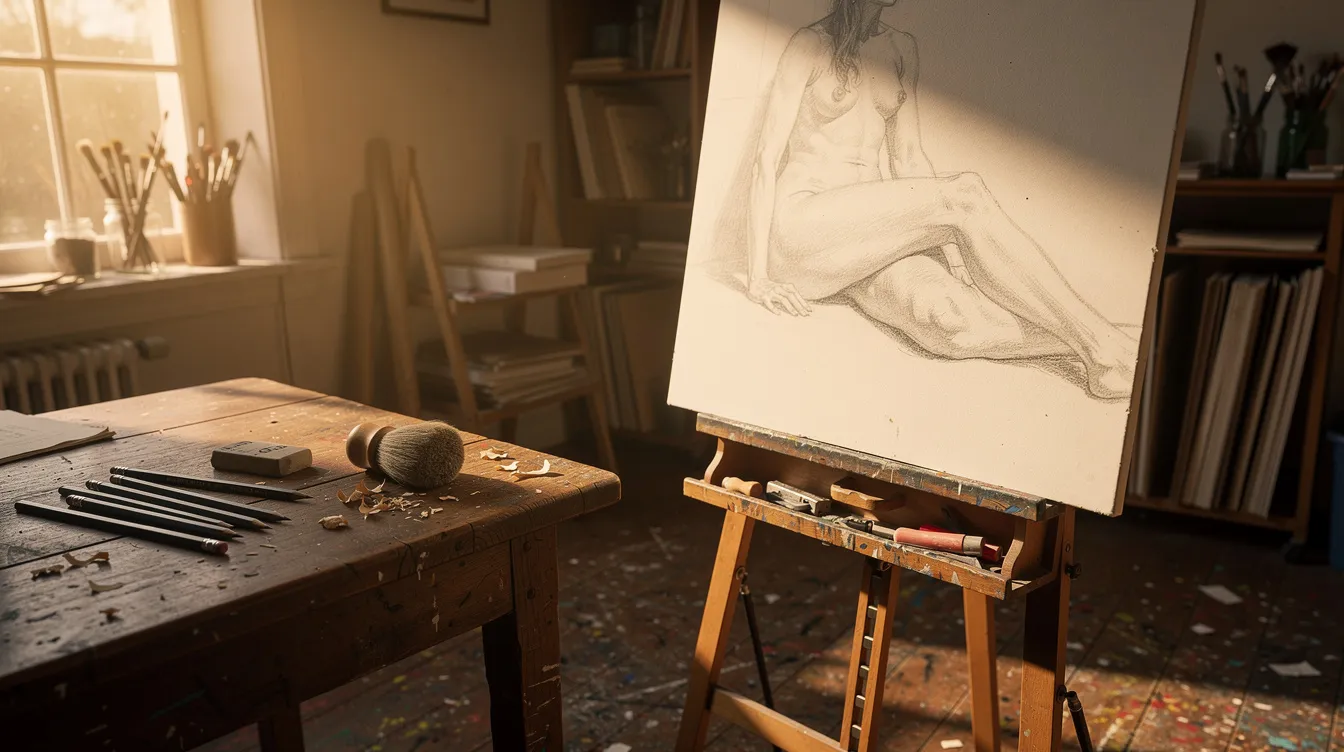
High-quality figurative art depends on a deep understanding of the human form. There’s no shortcut here. Creating erotic illustrations requires understanding of anatomy at a level where you can feel comfortable depicting how a body moves, rests, twists, and responds to another body. Without that knowledge, even the most evocative concept falls flat.
The most reliable way to build this foundation is life drawing. Short gesture sessions of 30 to 60 seconds train you to capture the line of action, the flow and rhythm of a pose. Longer studies of 20 to 30 minutes let you investigate weight distribution, how muscles compress when a body leans into a cushion, how skin stretches across the ribcage during a twist. Studying muscle groups improves realistic poses because you begin to understand which structures create the surface forms you’re drawing. Pay attention to pelvis tilt, the S-curve of the spine, the way the ribcage and shoulders oppose the hips in a natural stance. Classical proportions put the average adult figure at around 7 to 8 heads tall, but erotic illustration often plays with idealization or stylization, so understanding the baseline gives you freedom to deviate with intention.
Don’t forget the small parts. Hands, mouths, and eyes often carry more erotic tension than any amount of exposed skin. A hand resting on a collarbone, lips slightly parted, a half-lidded gaze directed at the viewer, these are the details that make a woman or any character feel present and alive in the image. As artist Lea Jelargic has described it, drawing is an artist’s handwriting, a deeply personal expression of how you see and interpret the body.
Modern tools can help. Digital mannequins in Clip Studio Paint (which integrated Posemaniacs pose imports starting around 2024), PoseMy.Art, and Charactool all let you adjust body proportions, lighting, and hand poses for reference. These are valuable supplemental aids, but they’re not replacements for watching real bodies move in real space. Use them to solve specific problems, like figuring out how light falls on an upraised arm, but always bring your own observation and sensitivity to the final drawing.
Planning Erotic Illustrations: Concept, Mood, and Boundaries
Before you draw a single line, you need to know what you’re making and why. The strongest erotic illustrations don’t start with a pose. They start with a feeling, a relationship, a moment of tension or release. What fantasy or emotional truth are you exploring? What is the story?
Developing a clear concept means answering a few questions early in the process:
- Who are the characters? Lovers reuniting, strangers making eye contact across a room, a performer and their audience?
- What moment of intimacy is being shown? The anticipation before a touch, the embrace itself, the quiet aftermath?
- What is the emotional core? Yearning, tenderness, power exchange, playfulness, vulnerability?
These decisions shape everything downstream: the pose, the setting, the palette, the degree of explicitness. A scene about seduction reads differently than one about comfort. A picture of longing uses different tools than one about pleasure.
Mood is where color, light, and style converge. Different color palettes help define the emotional tone of artwork: warm golds and roses for romance, cooler desaturated tones for melancholy or distance, saturated contrasts for raw intensity. A playful scene might call for bright pastels and dynamic posture. Something surreal might bend proportions or use unexpected hues. Every element must serve the mood you’ve chosen.
Then there are boundaries, both personal and practical. Decide in advance what level of explicitness you’re comfortable with, what body areas or sex acts will or won’t appear, and what content is off-limits. This isn’t about censorship. It’s about intention. Erotic art that tries to be everything to everyone usually ends up feeling unfocused. Boundaries give your work clarity and conviction.
A quick planning checklist to run through before you begin: confirm that any reference models are 18 or older, verify that you have consent or licensing for reference photos, review the platform policies where you intend to publish (many platforms in 2026 require explicit content behind age gates or paywalls), and consider whether this piece needs a “safe” version for broader audiences. These aren’t fun creative decisions, but they’re essential ones.
Posing and Composition for Sensual Impact
For a lot of people, the assumption is that eroticism requires full exposure. In reality, the opposite is usually true. What you conceal, crop, or leave in shadow often creates far more tension than what you show outright. The viewer’s imagination is your most powerful collaborator.
Start with gesture drawing to find the pose. You’re looking for rhythm: the flow through the spine, the sway of the hips, the tilt and opposition of shoulders. S-curves (the arching spine, the sweep from shoulder through hip to ankle) and C-curves (a curled torso, a bent leg) have been the backbone of sensual silhouettes since Renaissance figure painting. Think of Botticelli’s Venus or the contrapposto stance in classical sculpture. These forms aren’t arbitrary. They echo the way bodies naturally move when relaxed, open, and present.
Composition is where you control the game. Overlapping limbs, a knee drawn across a thigh, an arm draped across the chest, can simultaneously conceal and highlight. Props do similar work. A musical instrument like a cello cradled between the legs or a saxophone held close to the chest frames sensitive areas without explicit exposure while adding beauty and narrative texture to the scene. Fabric plays the same role: a sheet half pulled away, lace casting patterned shadows, a shirt unbuttoned but not removed. These choices invite the viewer to imagine the next thing rather than simply consume what’s visible.
Focal points matter. Use leading lines, the angle of an arm, the sweep of bed sheets, the neck of a guitar lying on the floor, to guide the eye toward the erotic centers of the image: eyes, mouths, touching hands, the space between two bodies. Value contrast (bright against dark) around the face or point of contact draws attention there naturally.
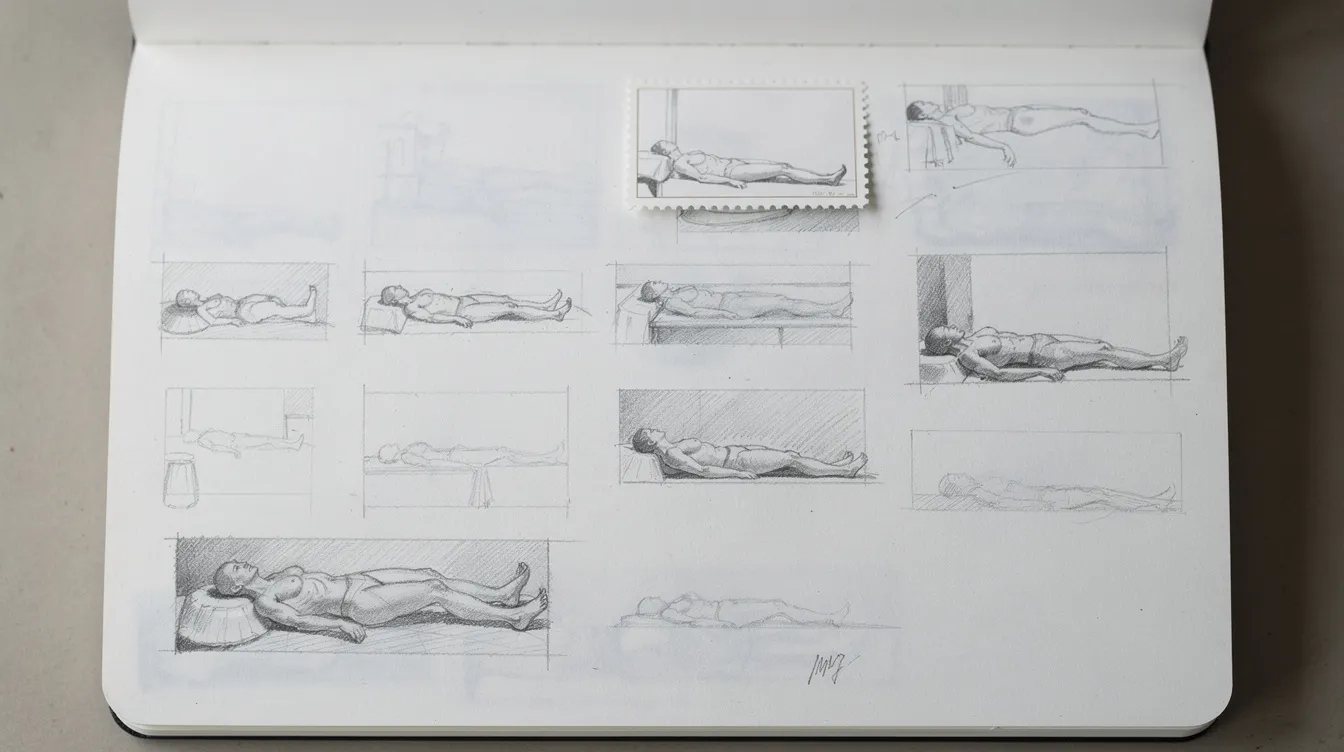
Practical tips for this stage: thumbnail 5 to 10 tiny compositional sketches before committing to a final layout. Experiment with perspective and camera angle. Close-ups and partial views create intimacy. Over-the-shoulder perspectives place the viewer inside the scene. Rotate and mirror your canvas to catch imbalances. These small habits prevent you from locking into the first composition that comes to mind, which is rarely the strongest one.
Rendering Skin, Light, and Texture
This is where an erotic illustration stops being a drawing and starts becoming an experience. Light and texture are what make the viewer feel like they could reach into the image and touch skin. Without them, even a perfectly posed figure feels flat and distant.
Dramatic lighting helps sculpt the body’s volume, defining curves, hollows, and the planes of muscle and bone. Shadows can create a specific mood in illustrations: a single bedside lamp gives warm, intimate pools of light and deep shadow; soft window light diffused through curtains creates tenderness; backlighting from a neon sign or sunset turns the body into a glowing silhouette with dramatic rim light. Each setup tells a different emotional story. Experimenting with medium impacts the feel of art as well, whether you’re working digitally or traditionally, the tools you choose change the texture of light itself.
Skin rendering rewards attention to subtlety. Real skin isn’t one color. Cheeks, ears, fingertips, and knees tend toward warmer reds, especially when flushed. Shadows in the creases of elbows or beneath collarbones carry cooler tones. Where bodies press into cushions or sheets, edges soften and blur. Where light catches the edge of a shoulder blade or the curve of a hip, edges sharpen. Highlights on moist surfaces, lips, the sheen of sweat along a collarbone, a wet lower lip, should be small and bright. These details suggest arousal and physical presence without needing to be explicit.
Contrasting textures adds a sensory layer to artworks that flat rendering can’t achieve. Smooth skin against rough linen sheets. The cool polish of a musical instrument’s wood body against warm flesh. Lace casting intricate shadows onto a thigh. Leather against bare skin. These contrasts give the viewer’s eye variety and make the image feel tactile, almost audible.
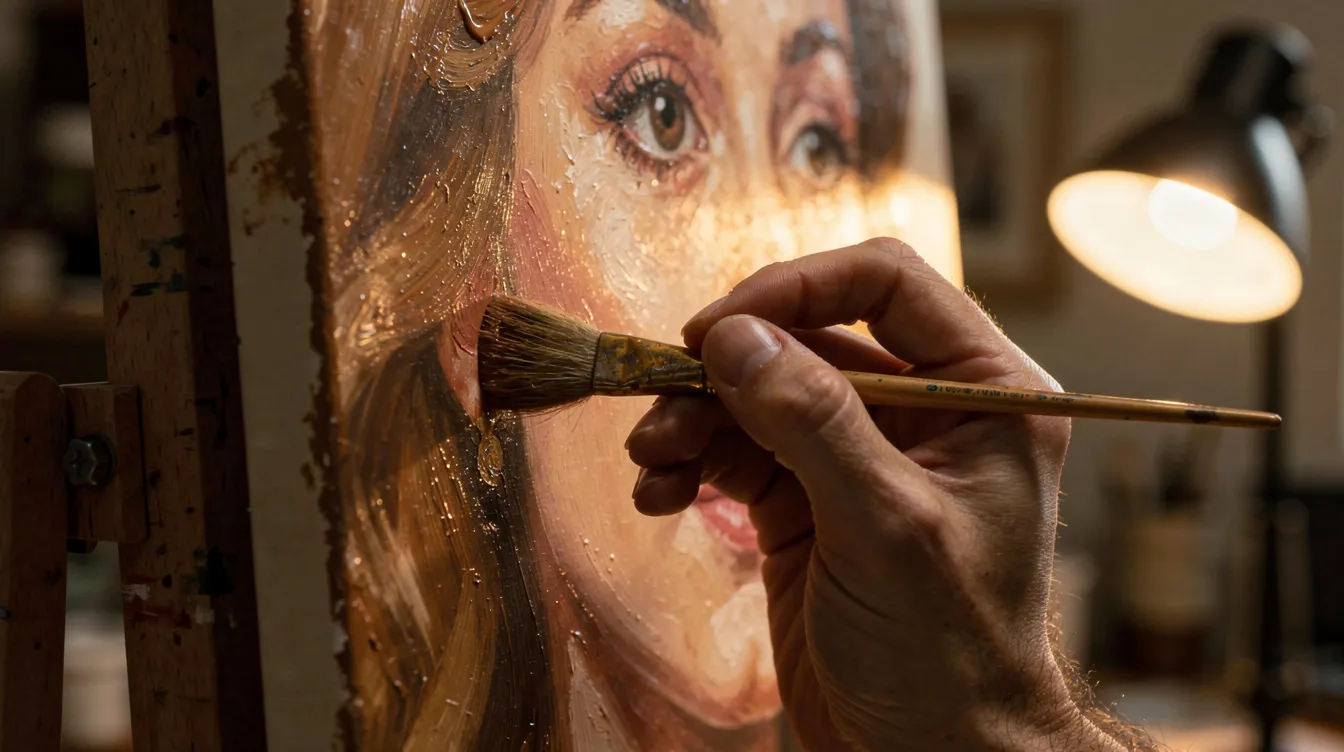
For digital artists working in Procreate or Photoshop, soft round brushes handle skin blending, while overlay and screen layer modes add warmth and specular highlights. Use multiply layers for shadows, a separate layer for shine. For traditional artists working in oils or acrylics, glazing with thin transparent layers builds luminous skin tones, while dry-brush technique suggests texture on fabric or hair. In either case, the technique should always serve the erotic effect, never the other way around.
Depicting Sex Acts with Story and Sensitivity
When sex acts do appear in erotic illustration, they should function the way they do in good erotic writing: revealing character, relationship, power dynamic, or narrative tension. An explicit scene that exists purely for shock or titillation, without emotional context, basically falls flat. Strong figurative work captures a moment of connection or emotion, not just a physical position.
What this often looks like in practice is suggestion rather than clinical framing. Cropping to show only tangled legs and clasped hands. Silhouettes behind frosted glass. An after-the-moment scene, disheveled sheets, discarded clothing, a guitar lying on the floor, two bodies at rest. These approaches let the viewer’s imagination fill in what happened, which is almost always more powerful than showing it directly. You don’t have to attempt photographic realism to convey sexuality and desire.
Body language is your storytelling tool. Relaxed hands signal comfort and trust. Eye contact between characters communicates mutual desire. Mirrored posture, where both bodies echo each other’s angles, reads as reciprocity and consent. Facial expressions matter enormously: closed eyes, a slightly open mouth, a forehead pressed against a partner’s neck. These cues let the viewer feel the relationship between the people in the image, not just the physical act.
Diversity in representation is not optional if you want your work to resonate in 2026. Depict different genders, body sizes, ages (always 18 and up), abilities, and ethnicities. Avoid exoticizing bodies or reinforcing stereotypes. A realistic range of bodies makes erotic art feel honest rather than aspirational in a narrow, exclusionary way. Interest in inclusive representation has only grown, and audiences increasingly expect it.
Many creators now maintain “safe” and “explicit” versions of the same image. The safe version might crop below the waist or add a strategically placed sheet, while the explicit version lives behind a paywall or on a platform that permits it. Designing compositions that can be cropped or censored without losing the erotic tension of the original is a real skill, one worth practicing from the concept stage. Think about where your focal point sits and whether it survives a tighter frame.
Using Reference, Ethics, and Professional Practice
Strong erotic art is research-driven. No one draws compelling bodies from imagination alone, at least not without years of studying real ones first. But how you gather and use reference material carries ethical weight.
The difference between using licensed photo sets, self-shot reference (with all participants’ written consent), and public-domain historical erotic art versus scraping content from someone’s private social media without permission is not a gray area. Use references you have the right to use. Period. If you’re photographing your own reference, ensure every participant is 18 or older with written consent. If you’re using stock, verify the license.
Maintain reference libraries organized by pose, lighting, and mood. This saves time and keeps your creative process flowing. But respect privacy within those libraries. Don’t share identifiable personal images online without clear agreements, and store metadata about model age and licensing if you’re using photographs.
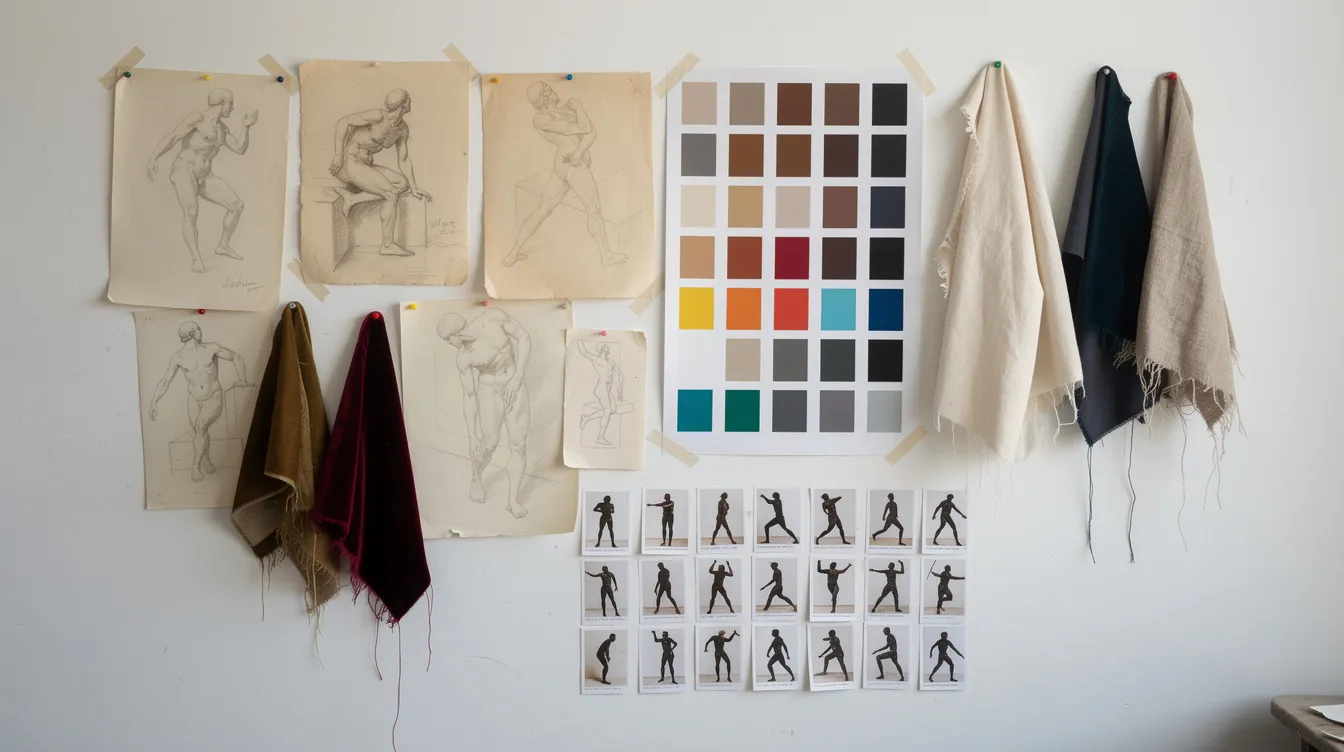
Studying historical erotic art traditions is one of the most rewarding things you can do for your visual vocabulary. From ancient Greek vase painting and Roman frescoes to 20th-century Japanese shunga, these traditions show how different cultures used symbolism, framing, and abstraction to depict the human form in states of desire. Shunga, for example, often emphasizes interaction, humor, and domestic context over bare exposure, a reminder that eroticism has always been about more than bodies. Artist Lea Jelargic draws inspiration from the philosophy of Wabi Sabi, embracing imperfection and transience in her erotic and figurative work. Even a project name can carry meaning: Eloah’s Art, for instance, translates to “God’s Art” in English, reflecting how some artists frame the human body as something sacred rather than shameful.
Professional habits matter here. Use clear content warnings when posting erotic work. Set up age gates on your website if you’re hosting explicit images. Consider maintaining separate portfolios or pen names if your erotic work needs to stay distinct from client or employer-facing material. Know the platform rules: Patreon requires explicit content behind paywalls, Instagram increasingly restricts sexually suggestive content for younger users, and Adobe’s policies classify graphic erotic depictions as adult content requiring appropriate warnings. These aren’t obstacles to your art. They’re the context you’re creating within.
Practice Routines and Long-Term Skill Growth
Talent is real, but it’s practice that makes the work consistently good. Here’s a sample weekly routine that balances fundamentals with creative exploration:
- Daily (10 to 15 minutes): Gesture drawing. Fast poses, 30 to 60 seconds each. This keeps your line loose and your eye sharp for capturing flow and rhythm.
- 2 to 3 times weekly (20 to 30 minutes): Longer anatomy studies from life or high-quality photo references. Focus on specific areas: hands one session, torsos the next, facial expressions after that.
- Once weekly: A full erotic illustration from concept through sketch to finished color. This is where you integrate everything, mood, pose, light, texture, narrative, into a single piece.
Keep a private sketchbook. This is your space to draw freely, to explore unusual compositions, fantasy scenarios, integrating props like musical instruments, experimenting with style without pressure to publish or perform. Some of the most interesting work comes from sketches that were never intended for anyone else’s eyes. Eventually, ideas from this sketchbook will feed your public portfolio.
Looking beyond illustration for inspiration expands your visual vocabulary. Watch films for lighting and framing. Read poetry for emotional compression. Listen to music for mood and pacing. Blending figure drawing with genres, whether noir, romance, horror, or surrealism, establishes a distinct artistic voice that sets your work apart.
Seek feedback in moderated online communities that accept erotic art. The key is finding spaces where people critique technique, anatomy, lighting, and composition rather than passing judgment on subject matter. Learn to separate the two. Practicing this distinction makes you a better artist and a more resilient one.
Erotic illustration is one of the most demanding paths in figurative art. It asks you to master anatomy, to understand light and color at a granular level, to tell stories with gesture and gaze, and to navigate the ethical complexities of depicting sexuality with care. It’s also one of the most rewarding. The passion and sense of emotional nuance you develop here will make every other kind of art you create stronger, more alive, more human. This is work that refines itself over years of consistent practice, and there’s real fun in the process of getting better at something that matters to you. Start where you are. Draw what moves you. Keep going.
About the Author: Gareth Redfern-Shaw

Share This Story, Choose Your Platform!
Related Articles

10.7 Min Read
279 Views
3 Today
15 Min Read
240 Views
1 Today
6.3 Min Read
152 Views
0 Today