
For every country that legalizes same sex marriage, another introduces a bill criminalizing queer existence. For every supreme court ruling that expands legal protections, a state legislature passes a law restricting who can use which bathroom, what care a doctor can provide, or what a teacher can say in a classroom. This is the dual reality of ongoing struggles and achievements in LGBTQIA rights in 2026: historic, undeniable progress running parallel to a sharp and deliberate backlash.
Since the Stonewall uprising of 1969, the global campaign to secure protections for LGBTQ+ people has made significant progress in recent decades, especially in the realm of marriage equality. Ireland’s 2015 referendum, Taiwan’s landmark 2019 legislation, and the U.S. Supreme Court’s decision in Obergefell v. Hodges that same year all marked turning points. But those gains exist alongside anti-LGBT “propaganda” laws in Russia (first enacted in 2013, expanded in 2022), Uganda’s devastating 2023 Anti-Homosexuality Act, and a surge of restrictive bills across U.S. state legislatures. The rise of anti-LGBTQIA legislation has prompted increased activism and advocacy efforts to counteract discrimination and promote equality, and grassroots movements play a crucial role in advocating for LGBTQIA rights by mobilizing communities and raising awareness about discrimination and violence.
Before going further, a few terms worth grounding. Sexual orientation refers to a person’s enduring pattern of emotional, romantic, or sexual attraction. Gender identity is an individual’s internal sense of their own gender, which may or may not correspond to the sex assigned at birth. Sex characteristics encompass the anatomical, chromosomal, and hormonal attributes relevant to understanding intersex experiences.
What follows moves through historic milestones, the current legal landscape, health and human services access, the specific vulnerabilities of transgender, nonbinary, and intersex communities, regional flashpoints around the world, and the intersectional data that shapes the road ahead.
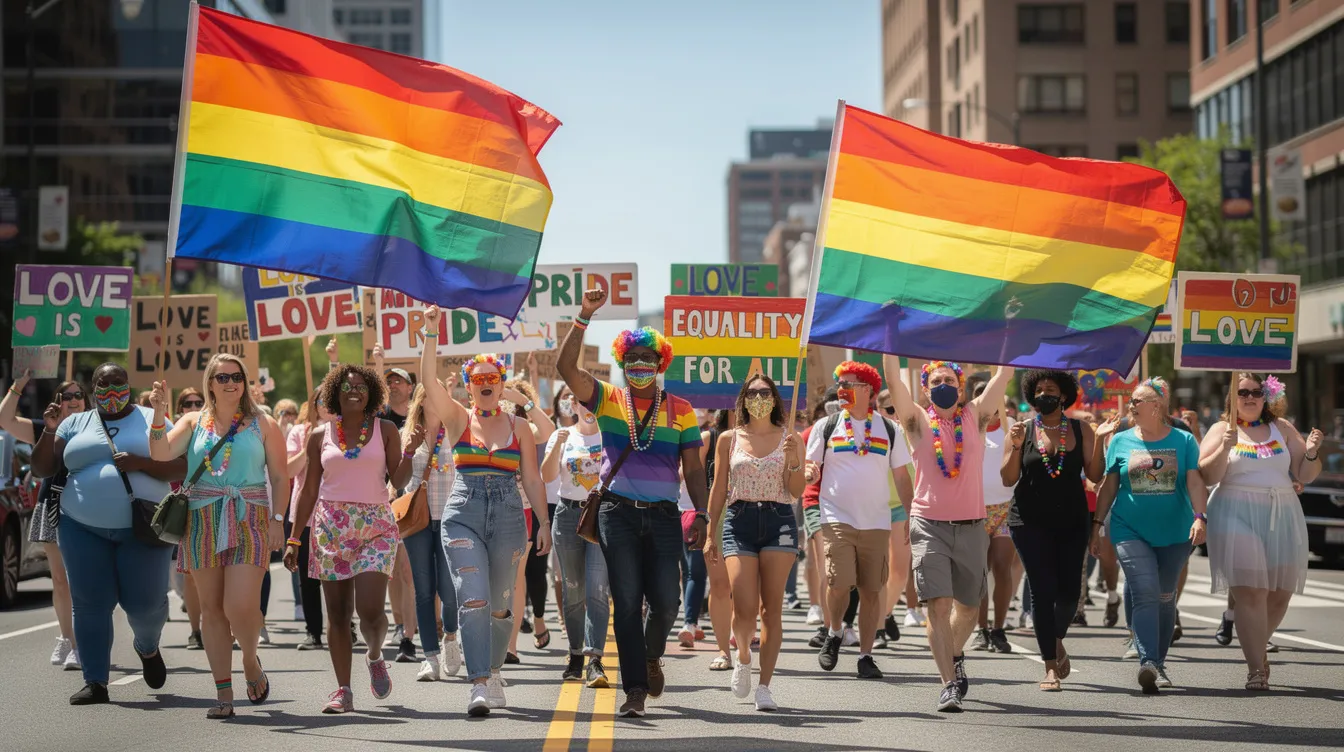
Historic Milestones: From Criminalization to Recognition
In the mid-twentieth century, almost every country on earth criminalized same-sex intimacy. The journey from near-universal criminalization to a world where over thirty nations recognize marriage equality happened faster than most people predicted, but it was neither smooth nor inevitable. LGBTQIA activists have made significant progress globally despite facing numerous challenges, including violence and legislative obstacles.
The 1948 Universal Declaration of Human Rights laid the philosophical groundwork by declaring that all human beings are born free and equal in dignity and rights. It took decades for that principle to be applied to sexual orientation and gender identity in any concrete legal framework. In 1990, the World Health Organization removed homosexuality from its classification of mental disorders, a shift that reshaped how medical and legal institutions treated gay men, lesbian women, and bisexual people. Four years later, the Toonen v. Australia case before the UN Human Rights Committee established that international human rights law requires states to protect individuals from discrimination based on sexual orientation.
The Yogyakarta Principles, established in 2007, articulated international human rights standards related to sexual orientation and gender identity, codifying how existing law applies to SOGI issues. These principles became a reference point for advocates and courts worldwide.
The trajectory of same sex marriage tells its own story of incremental progress. Denmark introduced civil unions in 1989. The Netherlands became the first country to legalize full marriage equality in 2001. In the United States, the path ran through the U.S. Supreme Court: the 2013 Windsor ruling established that the federal government must treat same-sex marriages equally to different-sex marriages, and in 2015 the supreme court ruled in Obergefell v. Hodges that same sex couples have a constitutional right to marry.
Progress reached beyond marriage. South Africa’s 1996 constitution explicitly prohibited discrimination based on sexual orientation. Argentina’s 2012 Gender Identity Law allowed people to change their legal gender without surgery. The Obama administration made significant advancements in LGBTQ+ rights, including the repeal of “Don’t Ask, Don’t Tell” and the legalization of same-sex marriage. The U.S. military’s ban on service by LGBTQ people had led to significant litigation, culminating in the repeal of that policy, opening the door to military service regardless of sexual orientation. Houston elected Annise Parker as the first openly lesbian mayor of a major U.S. city, a milestone that mattered both symbolically and practically.
Early organizing groups like the Mattachine Society laid the groundwork in the 1950s for what would become a global movement. In 2018, India’s Supreme Court decriminalized homosexuality in the Navtej Johar case, marking a significant legal advancement for lgbtq rights in a country of over a billion people. That same year, the Inter-American Court of Human Rights ruled that same-sex marriage and transgender rights constitute human rights, mandating protections across twenty Latin American countries.
These milestones did not happen in a vacuum. Each one was pushed forward by communities, litigators, and organizers who often risked everything.
Legal Landscape Today: Achievements and Persistent Gaps
Here’s the thing about legal progress: it is never as uniform or as secure as a list of wins might suggest. While many countries now protect lgbtq people in law, around seventy countries continue to criminalize homosexual activity, and in twelve countries, adults who engage in consensual same-sex acts can still face the death penalty. In many countries, LGBTQ+ individuals still face repression, imprisonment, and even the threat of death. For the first time in nearly a decade, the number of countries criminalizing same-sex relations actually rose in 2025, with Burkina Faso introducing new criminalization and Trinidad and Tobago reversing prior decriminalization.
Where progress is real:
- As of early 2025, 38 to 39 countries have legalized same sex marriage nationwide, allowing same sex couples to access the same legal recognition as opposite sex couples. Thailand became the first Southeast Asian nation to do so (effective January 2025), and Liechtenstein followed the same month.
- Multiple countries have enacted bans on so-called “conversion therapy,” including Germany (2020), France (2022), and Canada (2022).
- In 2020, the U.S. Supreme Court ruled in Bostock v. Clayton County that Title VII of the Civil Rights Act extends to discrimination based on sexual orientation and gender identity, meaning sex discrimination protections now cover lgbtq individuals in employment. That supreme court ruling was a turning point for nondiscrimination protections in the workplace, addressing employment discrimination that had been legal in much of the country.
- A majority of Americans now live in jurisdictions that provide express, comprehensive protections against sexual orientation and gender identity discrimination.
- The Biden-Harris administration took numerous actions across executive agencies to bolster nondiscrimination protections in federal regulations, and the Biden administration committed to using executive powers to restore the United States’ standing as a global leader in the defense of lgbtq rights. The federal government played a more active role in advancing lgbt rights during this period.
Where the gaps remain deep:
- In 2022 alone, state lawmakers introduced more than 300 bills targeting the rights of LGBTQI+ people, especially LGBTQI+ youth and transgender people. More than 200 anti-LGBTQ+ bills were introduced in the 2025 Texas legislative session alone.
- Organizations like Equality Texas reported blocking 96% of anti-LGBTQ+ bills during the previous legislative session, a testament to the power of organized advocacy. Still, what passes can be devastating.
- In 2015, Houston’s Equal Rights Ordinance (HERO) was repealed by voters, reflecting resistance to expansive LGBTQ+ protections even in diverse, major cities. That repeal underscored how legal gains can be reversed by ballot measures and political pressure.
- Activists often face state repression and violence while advocating for LGBTQIA rights, particularly in regions with authoritarian governance. The backlash against LGBTQIA rights in various countries has led to a resurgence of advocacy efforts aimed at protecting and promoting these rights.
- The international community, including organizations like the United Nations, has increasingly recognized the need for protections against discrimination based on sexual orientation and gender identity, appointing UN Independent Experts on SOGI beginning in 2016. Activism for LGBTQIA rights often intersects with broader human rights movements, emphasizing the importance of bodily autonomy and individual rights.
Family law remains a particularly uneven landscape. Many countries that recognize marriage equality still deny same sex couples full equality in adoption, parental recognition, or surrogacy. An adoption agency may legally refuse to work with same sex couples in several U.S. states under religious exemptions. For intersex people, legal recognition and protection remain minimal globally.
Health and Human Services: Access, Disparities, and Reforms
Legal rights matter immensely, but they mean little if people can’t walk into a clinic, access housing, or receive social support without fear of discrimination. Health and human services are where the distance between law and lived reality becomes most visible.
LGBTQIA individuals experience structural and interpersonal discrimination that adversely affects their well-being and drives disparate outcomes across crucial areas of life. The experiences of discrimination faced by LGBTQIA individuals can significantly affect their mental, physical, and financial well-being. Discrimination has substantial adverse effects on the economic, physical, and mental well-being of LGBTQIA individuals, and LGBTQIA individuals report that discrimination affects their mental well-being significantly more than non-LGBTQIA individuals.
Mental health realities:
Large-scale U.S. surveys paint a stark picture. The Trevor Project’s 2022 survey of roughly 34,000 young people aged 13 to 24 found that about 73% reported discrimination at least once due to their sexual orientation or gender identity. Nearly 40% of LGBTQ youth reported seriously considering suicide in the past year. These are not abstract numbers. They represent young people navigating a world that often tells them, through law and culture and silence, that something about them is wrong.
LGBTQIA individuals often face barriers to accessing mental health services, including affordability and concerns related to cultural competency. When the available providers don’t understand the realities of queer, trans, or intersex life, care becomes another source of stress rather than support.
Barriers to accessing health care:
LGBTQIA individuals often face barriers to accessing health care, which can be exacerbated by discrimination based on their sexual orientation, gender identity, or intersex status. Transgender and nonbinary individuals face unique challenges to accessing healthcare due to experiences of mistreatment, harassment, and discrimination. LGBTQIA individuals are more likely to report postponing or avoiding medical care due to cost concerns compared to non-LGBTQIA individuals. The 2022 CAP survey from the Center for American Progress found that more than one in three LGBTQI+ adults avoided or postponed medical care due to cost, and over one in five did so because of anticipated discrimination.
Policy milestones and setbacks:
The affordable care act’s Section 1557 (2016 regulations) defined sex discrimination to include gender identity and sex stereotyping, opening doors for transgender people seeking coverage. The trump administration rolled back portions of those protections, and the Biden administration partially restored and expanded them. That kind of policy oscillation creates real uncertainty for people trying to plan their medical care and their lives.
The world health organization’s ICD-11, effective January 2022, moved gender incongruence out of the “Mental and behavioural disorders” chapter entirely, reframing it as a condition related to sexual health. This was not a minor bureaucratic reclassification. It reshaped how health systems, insurers, and governments understand and fund care for transgender individuals.
Gender-affirming care under attack:
Senate Bill 14 in Texas prohibits healthcare professionals from providing gender-affirming medical care to adolescents. Texas continues to ban puberty blockers and hormone therapy for minors. These restrictions on gender affirming care and gender affirming surgery directly affect transgender youth and their families, forcing some to travel across state lines for treatment or go without.
UN agencies like UNAIDS and UNFPA continue to push for inclusive sexual and reproductive health services, including hiv prevention for men who have sex with men and transgender women, but structural barriers including criminalization and stigma limit their reach in many regions.
Houston has a strong network of support organizations providing vital health and social services to the LGBTQ+ community, demonstrating what local infrastructure can accomplish even in a hostile state-level environment.
Spotlight on Transgender, Nonbinary, and Intersex Rights
Progress for lesbian and gay rights, especially around marriage equality, has often moved faster than legal recognition of gender identity and sex characteristics. That gap leaves transgender, nonbinary, and intersex people more exposed to harm in ways that don’t always make headlines.
Legal gender recognition:
As of late 2024, about 12 countries allow legal gender change based solely on self-declaration, without medical or surgical requirements. Germany’s Self-Determination Act, enacted in June 2024 and in force since November 2024, allows transgender, intersex, nonbinary, and gender nonconforming individuals to change their legal name and gender marker on documents without a diagnosis or surgery. Countries like Australia, Canada, and the U.S. have introduced “X” gender markers on federal passports.
But in other jurisdictions, the opposite is happening. The Texas Department of Public Safety stopped accepting court orders for gender marker changes on state IDs and driver’s licenses, creating a direct barrier to legal recognition for transgender individuals in the state.
Discrimination in daily life:
Transgender individuals, LGBTQIA people of color, and LGBTQIA individuals with disabilities generally report experiencing discrimination at rates higher than those of other LGBTQIA individuals and of non-LGBTQIA individuals. LGBTQIA individuals with disabilities reported experiencing discrimination at elevated rates compared to their non-disabled counterparts. The intersection of multiple marginalized identities, such as race, gender, and disability, can compound the discrimination faced by LGBTQIA individuals.
LGBTQIA individuals often alter their behavior to avoid experiencing discrimination, which can include hiding personal relationships or changing their appearance. For transgender youth in particular, this kind of self-erasure carries enormous psychological costs.
Schools and youth:
Senate Bill 12 in Texas bans discussions of LGBTQ+ identities in K-12 schools and prohibits gender- and sexuality-based clubs. Senate Bill 12 resulted in the closure of student-led Gender and Sexuality Alliances (GSAs) in schools, including at Morton Ranch High School. New state laws restrict transgender individuals’ access to public restrooms in government buildings and schools. These policies don’t just limit access to facilities. They send a message about who belongs.
Legal challenges are ongoing. Lawsuits in U.S. federal courts challenge bans on transgender students in school sports and restrictions on gender affirming care, many of which were active or pending as of the mid-2020s.
Intersex rights:
Malta’s 2015 law banning non-consensual, unnecessary medical interventions on intersex minors remains one of the strongest early legal protections in this area. But globally, the practice of performing cosmetic or non-essential surgeries on intersex infants without informed consent continues largely unchecked. Few countries have explicit legal protections for sex characteristics in health law or human rights frameworks.

Regional Flashpoints: Progress, Backlash, and Geopolitics
LGBTQIA rights are deeply shaped by regional politics, religion, conflict, and geopolitical dynamics. What’s possible in one country may be unthinkable in the one next door. That variation matters enormously for the people living inside it.
Europe:
Western and Northern Europe broadly lead on protections, legal marriage, and gender recognition. But in Central and Eastern Europe, the picture is different. “LGBT-free zones” emerged in parts of Poland, and Hungary’s 2021 law banned content promoting homosexuality or gender transition to minors, following the model of Russia’s propaganda laws. Kazakhstan passed a law in 2025 restricting “non-traditional sexual orientation” content in media and public space. The continent is not monolithic, and assuming it is misses real danger.
The Americas:
Canada, Argentina, and Uruguay have been trailblazers. The U.S. has constitutional marriage equality since 2015, but state laws targeting transgender rights have proliferated. Houston ranked as the second-least LGBTQ+-friendly major city in the U.S. in late 2023 due to low per-capita pride events and local opposition to non-discrimination laws. A real estate study indicated Houston as the second-least LGBTQ+-friendly major city based on community support metrics, even as Houston scores 73/100 by HRC for local LGBTQ+-inclusive policies. That tension between policy scores and lived experience is worth sitting with.
The U.S. has become a leading advocate for LGBTQ+ rights internationally, although this credibility is tied to the country’s own fight for equality. The U.S. has become a leading advocate internationally, particularly during the Obama administration. Despite advances, many in the LGBTQ+ population still experience disproportionate economic and social disparities.
In Latin America, violence against transgender women remains devastatingly common, especially in Brazil and Central America, even in countries with progressive legal frameworks. A lesbian rights organization may operate openly in one city and face threats in another within the same country.
Asia and the Pacific:
Taiwan legalized same sex marriage in 2019, a first in Asia. India’s 2018 Navtej Johar ruling decriminalized same-sex relations. Thailand legalized same sex marriage in January 2025, the first country in Southeast Asia to do so. But persistent criminalization, censorship, and suppression of LGBTQ expression remain in many countries across the region.
Middle East and North Africa:
Widespread criminalization under religious or morality laws. Digital surveillance compounds risk. Activism often operates underground. Few countries in the region provide legal recognition or protections of any kind. The work that happens in these contexts is some of the bravest and most dangerous advocacy in the world.
Sub-Saharan Africa:
Many countries retain colonial-era sodomy laws. Uganda’s 2023 Anti-Homosexuality Act imposes life imprisonment or death sentences under certain clauses. Niger introduced a penal code in 2026 criminalizing homosexuality for the first time, with prison sentences of 5 to 10 years. Efforts to decriminalize homosexuality continue in some countries: Botswana’s High Court ruled to decriminalize consensual same-sex activity in 2019, and Angola and Mozambique have slowly reformed.
Conflict and crisis:
The Taliban’s return to power in Afghanistan in 2021 eliminated protections and forced many LGBTQ people underground or into exile. Russia’s invasion of Ukraine in 2022 disrupted life for everyone, and LGBTQ people among refugees faced particular risks in displacement and asylum processes.
Intersectionality, Data, and the Road Ahead
Aggregated statistics about the lgbtq community can obscure as much as they reveal. Intersectionality is not a buzzword. It is the reality that race, class, disability, migration status, national origin, and other factors shape the specific experiences of LGBTQIA people, often compounding discrimination in ways that demand disaggregated attention.
What the data tells us:
The 2022 CAP survey from the Center for American Progress found that LGBTQIA individuals reported higher rates of discrimination than non-LGBTQIA individuals across various settings, including health care, employment, housing, and public spaces. About 36% of LGBTQI+ adults reported discrimination in the past year, compared to roughly 19% of non-LGBTQI+ adults. Among intersex respondents, approximately 67% reported discrimination. Among transgender and nonbinary respondents, the rate was about 56%.
LGBTQIA individuals of color reported experiencing discrimination based on their race at higher rates than their white counterparts. LGBTQIA individuals experience significantly higher rates of discrimination than non-LGBTQIA individuals in various settings, including healthcare, employment, housing, and public spaces. The intersectionality of LGBTQIA rights with issues related to race, gender, and economic status is crucial for understanding the unique challenges faced by individuals at these intersections.
Economic disparities:
Employment discrimination and workforce exclusion narrow pathways to economic security for LGBTQIA communities, contributing to elevated rates of poverty and housing instability. LGBTQIA individuals report experiencing discrimination in housing situations, including being denied necessary maintenance or being discouraged from renting or buying a home. Transgender youth face particularly high rates of housing insecurity and homelessness. For Black, Indigenous, and migrant LGBTQIA people, these disparities are compounded.
What’s happening at the local level:
The Montrose Center raised a record-breaking $571,000 at the 2025 “Out for Good” Gala to support local services, demonstrating what community investment looks like in practice. The 2025 Greater Houston LGBTQ+ Community Summit focused on developing a “unified queer agenda” addressing health, safety, and equity. An assistant secretary for health and human services who understands these issues can make a material difference in how federal resources reach local communities.
Policy priorities for the next chapter:
- Enact a comprehensive equality act at the federal level that explicitly includes sexual orientation, gender identity, and sex characteristics.
- Protect access to gender affirming care for transgender youth and adults, and resist efforts to use medical care as a political weapon.
- Ban conversion therapy with real enforceability.
- Ensure full family law equality: adoption, parental rights, surrogacy. Equal treatment under family law should not depend on zip code.
- Expand legal gender recognition with self-declaration models.
- Strengthen protections for intersex people against non-consensual medical interventions.
- Support asylum pathways for those fleeing anti-LGBTQIA persecution.
- Improve data collection: more governments need to track sexual orientation and gender identity in censuses, health surveys, and vital statistics, while safeguarding privacy and safety. That work matters for lesbian gay bisexual transgender communities and for everyone working in women’s rights, public health, and civil liberties.
State lawmakers across the country and legislators around the world will continue to introduce bills that restrict rights. That is predictable. What is also predictable, based on decades of evidence, is that community organizing, strategic litigation, inclusive public health policies, and global solidarity have repeatedly turned rights from aspiration into reality. The work of advancing lgbt rights has never depended on a single court, a single law, or a single election. It depends on the sustained commitment of people who refuse to accept that things cannot change.
Significant progress has been made. And significant harm is still being done. Sometimes both things are true, and acknowledging that is not a contradiction. It is clarity.

If you want to be part of what happens next, consider supporting local LGBTQIA organizations in your area. Learn what legislation is moving through your state or country. Talk to your family members about why these issues matter. Advocate for policies grounded in human rights, evidence, and the simple belief that every person deserves to live openly, safely, and with dignity. The road ahead is neither straight nor guaranteed, but the people walking it have never been more determined.
About the Author: Gareth Redfern-Shaw

Share This Story, Choose Your Platform!
Related Articles

13 Min Read
336 Views
1 Today
10.7 Min Read
314 Views
1 Today
6.3 Min Read
174 Views
2 Today