
Looking for a support group shouldn’t feel like solving a puzzle, but for a lot of people in the LGBTQIA+ community, it does. Whether you’re a teenager figuring things out at school, an adult dealing with the weight of discrimination, or a parent trying to understand your child, there are real spaces designed for you. This guide walks through how to find support, what to look for, and what to expect when you get there.
Quick-start guide: how to find an LGBTQIA+ support group today
If you need connection now, especially if your mental health feels fragile, don’t wait until you’ve read this entire article. Here are concrete steps you can take today.
- Search national directories. CenterLink maintains a directory of 270+ LGBTQ community centers across 45 U.S. states. The OutCare LGBTQ+ Affirming Care Directory lists over 4,500 providers globally. Both let you search by ZIP code.
- Use specific search terms. Search “LGBTQ support group near me” plus your city and year, like “LGBTQ support group Dallas 2026.” Add terms like “trans support group,” “nonbinary,” or “queer youth” for more targeted results.
- Contact local centers directly. Visit a local pride center’s website, find their Programs page (look for the home jump left navigation to locate group listings), and ask about free or low-cost peer support groups. Email or call. Most centers respond quickly.
- Check PFLAG. PFLAG has over 400 chapters across the U.S. Use their chapter finder for family and ally focused meetings. Many chapters also connect you to youth resources.
- Try campus centers. If you’re a college or grad student, your university likely has an LGBTQ resource center with student groups, counseling, and community events.
- If you’re in crisis right now: Contact The Trevor Project (call 1-866-488-7386 or text START to 678-678), Trans Lifeline (1-877-565-8860), or dial 988 in the U.S. These are free, confidential, and available 24/7. You can talk to a trevor counselor anytime.
Why LGBTQIA+ support groups matter for mental health
The research is clear and getting clearer every year. Large-scale 2024 surveys of LGBTQ young people show that 39% seriously considered suicide in the past year, and roughly half of those who wanted mental health care couldn’t access it. The connection between isolation, minority stress, and psychological harm is not theoretical. It shows up in the data and in the lived experiences of millions of people.
Support groups reduce social isolation and shame by offering a safe and inclusive space where people can be themselves, whether they’re out, questioning, or somewhere in between. LGBTQIA support groups foster community and connection among members in ways that individual therapy alone often can’t replicate. They provide safe spaces for LGBTQIA individuals to share experiences without judgment.
Here’s the thing about the numbers: LGB adults are more than twice as likely to experience mental health conditions compared to heterosexual adults. Transgender individuals are nearly four times as likely to experience mental health conditions. And 40% of LGBT adults have reported experiencing rejection from family or friends. These aren’t abstract statistics. They describe the environment that makes support groups not optional, but necessary.
LGBTQ youth and transgender youth face disproportionate risks of depression, anxiety, and suicidality. Affirming spaces serve as genuine protective factors. But the benefits go well beyond crisis prevention. Positive support systems enhance personal growth and resilience. People build self esteem, develop coping tools for discrimination and family conflict, and practice navigating the world with more confidence.
For adults and elders, groups address unique challenges like late-life coming out, grief, long-term relationships, and healthcare access in a queer affirming setting. And joining a group is a strength, not a sign that something is broken. Many people attend while also seeing a therapist, and that combination works well.

Types of LGBTQIA+ support groups you might find
Not all groups look the same, and that distinction matters. Here are common formats you might encounter:
- General peer support groups for LGBTQIA+ adults that focus on sharing experiences, building community, and mutual aid. These tend to be free and open.
- Youth and young adult groups (ages 13–17 or 18–24) that center school issues, family acceptance, identity exploration, and friendship building. These are particularly important given that 86% of LGBTQ+ youth reported being harassed or assaulted at school.
- Transgender, non binary, and gender diverse groups addressing gender dysphoria, transitioning, name and pronoun changes, navigating workplaces, and accessing medical care. These spaces let participants explore feelings around gender identity at their own pace.
- Identity-specific groups for BIPOC LGBTQ folks, faith-based communities, parents and families, or sober and recovery-focused individuals. Lambda Center Houston, for example, has served as a recovery haven for LGBTQ+ individuals since 1978.
- Therapy-led or psychoeducational groups run by licensed clinicians, often more structured with specific goals. Clients learn to manage internalized homophobia and toxic shame, set healthy relationship boundaries, and develop concrete skills. These may involve insurance or fees.
- Social and interest-based groups that blend support with activities like book clubs, art, or game nights, building connections around shared interests.
Support groups provide a safe space for unfiltered expression and foster personal growth and self-discovery. Participants learn to set healthy relationship boundaries. Whether peer-led or clinician-led, virtual or in-person, the format matters less than whether the space feels right for you.
How to find local LGBTQIA+ centers and community organizations
Most recurring support groups operate through community centers, pride organizations, or campus programs. Here’s how to find them.
- Use CenterLink’s online map to locate LGBTQ centers in specific cities and states. Whether you’re in california, arizona, colorado, wisconsin, indiana, new mexico, or texas, the directory covers centers across the country. Check each center’s Programs or Support Groups page for schedules.
- Search city-specific organizations. Try searches like “Sacramento LGBT Community Center support groups” or “Lexington Pride Center programs.” Cities like oklahoma city, york (ny), and washington all have active pride organizations.
- Houston as a case study. Houston has a robust network of LGBTQ support groups and mental health programs. The Montrose Center is a major hub for the local LGBTQ+ community, and PFLAG Houston supports families and allies of LGBTQ+ individuals. These aren’t exceptions. Many cities have similar ecosystems.
- Campus centers. University LGBTQ resource centers often host groups open to students and sometimes to the broader community.
- Contact centers directly. Ask about group schedules, accessibility, language options, whether registration is required, and whether groups are offered year round. Some directories show distances in imperial units, which can help gauge travel time.
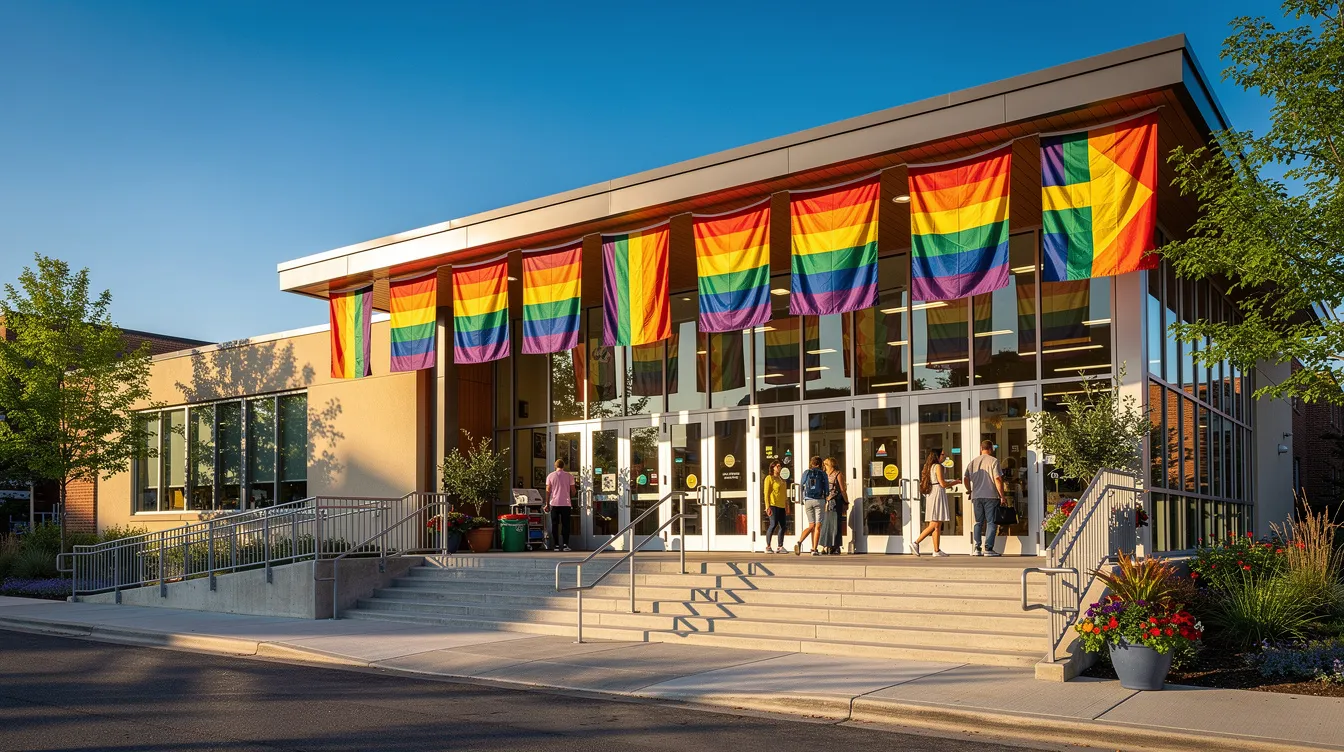
Finding safe and inclusive online LGBTQIA+ support spaces
For people in rural areas, unsafe households, or regions with limited in-person options, online groups aren’t a consolation prize. They’re a lifeline. Virtual communities let people connect across geography with more privacy and, often, more anonymity.
- Moderated platforms. Search for LGBTQ support groups on Meetup, Pride-focused Discord servers, and nonprofit sites. Look for groups with active facilitators and clear rules.
- Youth spaces. TrevorSpace is a moderated online community for lgbtq youth ages 13–24. The Trevor Project offers 24/7 crisis support for LGBTQ youth through phone, text, and chat. These are among the most established support resources available.
- What makes a space safe. An inclusive space has explicit rules, active moderation, zero tolerance for hate speech, confidentiality expectations, and content warnings. If those elements are missing, proceed carefully.
- Trust your instincts. If an online space feels invalidating, pressuring, or dismissive of your identity, leave. There are better options. Not every group with a rainbow logo is actually an affirming space.
- Combine with other services. Pair online groups with text-based hotlines or chat services when you need more immediate support. Sometimes both things are true: you want ongoing community and you need help right now.
Research into emerging formats, including metaverse-based support environments, shows high satisfaction among participants who can express their gender identity through avatars and interact in immersive digital spaces. The world of virtual support is expanding.
How to evaluate if a support group is safe, affirming, and right for you
It’s completely normal to try a group and decide it isn’t the right fit. That doesn’t mean groups don’t work. It means you haven’t found your group yet. Here’s what to look for.
Questions to ask organizers:
- Who facilitates the group? Are they trained in LGBTQ issues and trauma-informed care?
- Who is the group for (lgbtq young people, trans adults, families, everyone)?
- How is confidentiality protected?
- Are allies present, and if so, in what role?
Signs of an affirming group:
- Correct names and pronouns are used and respected
- Explicit support for all LGBTQIA+ identities, including lesbian, gay, bisexual, transgender, and non binary members
- Clear anti-bullying and anti-racism policies
- Group norms like no cross-talk, voluntary sharing, and “take what you need, leave the rest”
- Any mention of conversion therapy or pressure to change your identity
- Dismissive responses to questions about safety or understanding
- Lack of privacy protections, especially in online settings
- An environment where certain identities are centered while others are minimized
If a group feels unsafe or shaming, leave. You don’t owe anyone your continued presence. Keep looking. A safe space exists for you.
Special focus: support groups for LGBTQ youth and families
LGBTQ youth navigate unique challenges at school, at home, and online that adults in the community may not fully remember or understand. Family acceptance profoundly impacts mental health outcomes, and the absence of it creates real danger. LGBTQI youth have a 120% higher risk of experiencing homelessness compared to their peers.
- School-based GSAs. Gender and Sexuality Alliances (formerly Gay-Straight Alliances) provide peer community within schools. GLSEN offers resources on how to find or start one. Ask a trusted teacher or counselor.
- Youth-specific community groups. Organizations like Hatch Youth provide peer support for LGBTQIA+ individuals aged 7 to 24. Tony’s Place supports LGBTQ+ youth with basic needs and community engagement. These program models exist in cities across the country.
- Family and caregiver groups. Parents and caregivers need their own spaces. Groups help them learn affirming language, navigate healthcare decisions, and find support for the person they love. PFLAG chapters are widely available for this purpose.
- Confidentiality for youth not out at home. If you’re not fully out to your family, talk with group facilitators about privacy needs before attending. Good facilitators will understand and protect your information.
- Caregivers: attend your own groups. Young people deserve a peer-led safe and inclusive space without parental monitoring. Caregivers showing up to their own group, rather than hovering over their child’s, communicates trust and respect.

What to expect at your first LGBTQIA+ support group meeting
Showing up for the first time can feel nerve-wracking. That’s not a reason to stay home. It’s a reason to go anyway and see what happens.
What this often looks like in practice is:
- Welcome and introductions. Usually first names and pronouns only. Nobody is going to ask you to tell your life story.
- Ground rules review. Confidentiality, respect, voluntary participation. Most groups remind members of these each session.
- Sharing time. You can talk about what’s on your mind, whether that’s dealing with depression, navigating relationships, figuring out your identity, or just having a hard week. Or you can simply listen. Both are fine.
- Closing. A brief check-out, sometimes a word or phrase about how you’re feeling. Meetings typically last 60 to 90 minutes.
You don’t need to identify yourself in any particular way. You don’t need to disclose your history, your feelings about your family, or anything else before you’re ready. Afterward, reflect on whether the space felt like somewhere you could return. Did the members seem to thrive in this environment? Did you feel a sense of belonging, even a small one? That matters more than whether it was perfect.
Balancing support groups with other mental health and community resources
Support groups are powerful. They’re also one piece of a larger picture. In reality, building a full life means connecting with diverse resources.
- Affirming therapy. Combine groups with individual or family therapy, especially for trauma, severe anxiety, or suicidal thoughts. Many therapists are interested in working alongside group facilitators.
- Healthcare. Planned Parenthood Gulf Coast offers affordable healthcare including gender-affirming hormone therapy. Legacy Community Health provides LGBTQ-friendly health services. AIDS Foundation Houston provides HIV/STI prevention services and testing. Organización Latina Trans in Texas assists trans and gender non-conforming individuals with access to services. These are real, existing resources.
- Legal and practical support. Legal aid for name and gender marker changes, housing support, and food assistance are available through many LGBTQ centers.
- Social connection. Many organizations host events like game nights, art workshops, and book clubs alongside their groups. Building friends and community beyond the meeting room makes everything else more sustainable.
- Crisis services. Hotlines and text lines are for immediate moments of distress and can be used alongside ongoing group participation.
Finding your people may take time. That’s okay. Each step, whether it’s sending an email, attending a single meeting, or joining a virtual space, is progress toward a more connected, supported life. You don’t have to explore this world alone.
Key crisis and help resources
Save these. Share them. They are free, confidential, and available whether or not you’ve ever joined a group.
Resource
Contact
Who it serves
The Trevor Project
1-866-488-7386 / Text START to 678-678
LGBTQ youth, 24/7
Trans Lifeline
1-877-565-8860
Transgender people, peer support
988 Suicide & Crisis Lifeline
Call or text 988
Everyone in the U.S., suicide prevention
If you’re outside the U.S., check local suicide prevention lines and national LGBTQ organizations for equivalent services. Save these numbers in your phone now, for yourself or for a friend who might need them.
About the Author: Gareth Redfern-Shaw

Share This Story, Choose Your Platform!
Related Articles

10.7 Min Read
34 Views
2 Today

8 Min Read
53 Views
2 Today