Introduction to Advanced BDSM Techniques Workshops
If you’ve moved past the basics and find yourself hungry for something more precise, more psychologically layered, and more intentional in your kink practice, advanced BDSM techniques workshops are where that growth happens. These aren’t lecture halls or casual meetups. They’re live, skills-based learning environments designed for experienced kinksters who already know how to negotiate a bdsm scene and are ready to refine the craft behind it.
Across 2024 to 2026, advanced bdsm classes have evolved from simple demos into immersive, multi-day intensives that blend technique, psychology, and relationship skills into a single cohesive curriculum. Events prioritize safe, sane, and consensual practices while pushing participants toward genuine mastery. Where BDSM 101 might teach you how to swing a flogger, advanced techniques workshops take a deep dive into complex impact play, rope suspensions, mental play, and scene design. The goal is concrete: read anatomy, control pacing, understand psychological endpoints, and build bdsm scenes that feel coherent from the first whispered command to the last moment of aftercare.

Who Advanced BDSM Workshops Are For (and Who They Aren’t)
These workshops are built for people who already understand consent frameworks, have experience using safewords, and know their way around basic toy use. If you’ve begun experimenting with power dynamics, spent time in your local kink community, and have some real scenes under your belt, you’re likely ready.
Here’s who tends to show up. Experienced couples wanting to deepen their D/s connection and explore more intense kinky play together. A dominant looking to refine their technique with canes, floggers, or rope. Switches who want fluency and confidence in both topping and bottoming. A seasoned submissive seeking more psychologically complex experiences. Solo kinky people exploring their own edges. Classes are tailored for beginners and experienced practitioners, but advanced classes assume a foundation. Most people attending have already worked through different skill levels in foundational settings.
If you haven’t yet taken a BDSM 101 course (which typically covers bondage, discipline, and safety techniques) or tried a BDSM 201 offering with hands-on training in a professional dungeon, those are better starting points. You should already be comfortable with simple impact, basic rope ties, and negotiation protocols before stepping into an intensive. That distinction matters.
These workshops are typically inclusive of all genders, orientations, and relationship structures. Whether you’re monogamous, polyamorous, attending with a play partner or solo, you’re welcome. Just check each workshop’s stated prerequisites before enrolling.
Core Skills Covered in Advanced BDSM Technique Workshops
Most advanced workshops organize their curriculum around three pillars: technical skills, psychological skills, and relationship or communication skills. Together they address the many aspects of what makes bdsm play genuinely satisfying and sustainable.
On the technical side, a typical tutorial covers heavy impact play (canes, paddles, whips), advanced bondage including predicament bondage and partial suspension, and intense sensation play such as wax, temperature work, and blade play demonstrations. You’ll encounter terms like florentine flogging (alternating flogger patterns that layer sensation) and full-body rope harnesses built for suspension or dynamic positioning.
The psychological modules focus on constructing a coherent scene arc, deepening power exchange, and crafting mental play that doesn’t rely solely on toys. This includes anticipation, denial, and structured protocols that extend D/s into daily life. Negotiation is crucial in establishing D/s dynamics, and BDSM requires pre-negotiation and consent before any play begins. These aren’t afterthoughts; they’re core bdsm skills taught alongside the physical techniques.
On the relationship side, workshops cover tailoring play to a long-term partner, maintaining intimacy after intense scenes, integrating kink into daily routines, and navigating jealousy or poly dynamics. BDSM dynamics can foster trust and communication skills, and D/s dynamics can create lasting relationships through mutual pleasure when these communication tools are practiced consistently. Sex and intimacy are treated as ongoing conversations, not one-time negotiations.
Advanced Impact Play, Spanking, and Toy Mastery
Advanced impact play differs from entry-level spanking in the same way a conversation differs from reading words off a card. It demands precision, body mechanics, pacing, and the ability to read subtle reactions in real time. Impact play includes techniques like spanking and flogging, but at this level, the focus shifts to how you wield those tools and why.
Workshops break down anatomy in detail: safe zones versus risky zones (avoiding kidneys, spine, joints), intensity mapping using color-coded or numerical scales for negotiation, and how different impact play techniques elicit varied reactions from submissives. A stingy crop across the thigh tells a completely different story than a thuddy leather flogger on the upper back. Understanding these differences is what separates competent play from artful play.
Common impact and spanking toys used in these classes include leather floggers with varying tail counts, rattan canes, wooden paddles, riding crops, rubber straps, and specialty tools like finger floggers. Advanced impact play workshops demonstrate various types of impact play equipment, comparing flex, weight, and energy transfer across implements. BDSM toys should be made from body-safe materials, and quality matters. Look for tools constructed from the highest quality materials, as durability and consistency directly affect safety and sensation. Many workshops also address how sex toys and impact tools intersect in scene design.
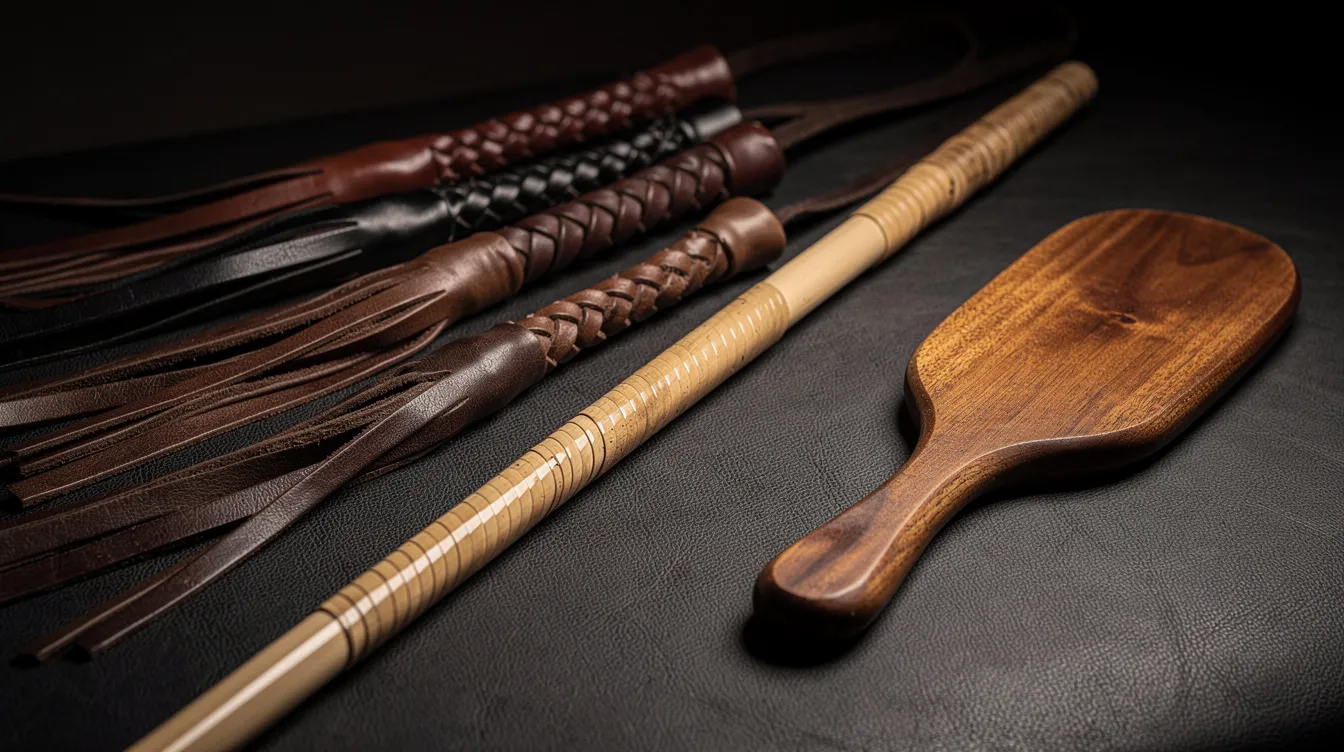
Instructors often use live demonstrations with volunteer bottoms to show stance, swing, aim, and recovery. The teaching follows phases: warm-up with light hits that gradually build depth, escalation through increasing force and variety, and cool-down with lighter work and soothing touch. Experimenting with rhythm and style is essential. Percussive patterns, alternating sides, combining thuddy and stingy implements, and layering different types of sensation all contribute to the story of the scene.
Risk-aware practices are central. That means medical screening before play, checking for circulation issues or medications, avoiding spinal and kidney areas, and learning how to play hard while minimizing serious injury. Risk assessment is crucial for safe BDSM practices, and instructors treat this as non-negotiable content.
Bondage, Predicament Play, and Rope Intensives
Advanced bondage workshops move well past basic wrist ties into complex positions, partial suspensions, and predicament bondage scenarios. While bondage techniques can involve basic rope tying methods at the foundational level, advanced work requires understanding load distribution, rope selection (diameter, stretch, material), hardware like carabiners and ceiling-rated anchor points, and nerve and circulation risks.
Classes typically cover safety shears use, how to check for numbness and skin tone changes, and how to perform frequent circulation checks without breaking the scene’s energy. Some instructors who have competed for or won international bondage awards bring specialized aesthetic and technical knowledge, teaching single patterns like the dragonback harness or TK chest harness variants with step-by-step instruction and supervised practice. Participants work with their own bondage gear under close observation.
Predicament bondage creates psychological tension through physical design: each small movement increases strain or sensation. Think tiptoe ties, partial suspensions with shifting weight, or pulley systems where adjusting one limb increases pressure on another. The psychological component here is as important as the physical.
Research has found that participants in suspension bondage face significantly higher injury risk, with nerve damage symptoms reported in roughly one-third of bondage injuries. This is why negotiation for restrictive bondage includes explicit time limits, emergency signals beyond verbal safewords (taps, dropped objects), and thorough health screening for joint issues and circulation concerns.
Electric play can be tailored for both pain and pleasure, and some intensives incorporate e-stim alongside rope or sensation work. These combinations demand even more careful negotiation and safety awareness.
Designing and Running a Complex BDSM Scene
A well-crafted bdsm scene has a narrative arc: a beginning that sets tone and anticipation, a middle that builds and layers intensity, and an end that provides resolution and care. Advanced workshops teach participants how to create and execute this arc intentionally rather than improvising and hoping it works.
Pre-scene negotiation tools include kink lists, scene planner worksheets, and structured question sets that identify desires, triggers, and hard limits. Use safe words to ensure clear communication during play, and establish those signals during negotiation rather than in the moment. Workshops teach negotiation and consent in BDSM practices as foundational to every scene, not optional additions.
Pacing instruction covers building suspense through anticipation and delay, layering sensations (starting with light sensation, adding pain, introducing contrast), and using surprise elements within pre-negotiated boundaries. Integrating multiple techniques into one cohesive scene is where things get interesting. You might combine bondage, impact play, dirty talk, and orgasm control while maintaining a consistent psychological tone and power structure. Understanding body language enhances D/s scene dynamics, allowing the top to read when to push and when to ease without breaking flow.
What this often looks like in practice is a scene where a dominant opens with protocol and verbal commands, introduces restraint, transitions into impact with careful escalation, weaves in verbal humiliation or praise depending on dynamic, and brings the scene to a peak before guiding the bottom into aftercare.
Aftercare is essential for transitioning back from BDSM scenes. Physical aftercare includes cooling, massage, and hydration. Emotional aftercare involves decompression, talking through what happened, and follow-up check-ins hours or even days later. Aftercare helps individuals transition back from subspace, and skipping it can cause lasting emotional harm even when the scene itself was consensual and desired. Edgy scenes demand even more thorough aftercare planning. Any ideas you have about aftercare should be discussed before play begins, not figured out after.
Psychological Play: Power Dynamics, Humiliation, and Mental Games
Psychological or mental play uses the mind-body interface to create intensity. Anticipation, verbal interaction, power dynamics, head games, objectification. It can be profoundly intense even with minimal physical contact.
Workshop topics in this area include consensual objectification, humiliation play, degradation with clear value boundaries, and long-term protocol design for everyday D/s relationships. Humiliation play can enhance emotional intimacy between partners when it’s built on deep trust and explicit consent. Humiliation play can include role-playing and consensual shaming, and instructors teach how to navigate these taboo topics with care rather than avoidance.
Preparation is everything. Instructors stress understanding a partner’s history, trauma awareness, and strategies to avoid unintentionally replicating real-life harms. BDSM can provide therapeutic benefits by addressing trauma, but only when the context is intentional and consent is robust. The line between erotic shame and genuine emotional damage is one that requires ongoing communication to maintain.
Skills taught include crafting personalized verbal scenarios that hit fantasy rather than real insecurities, developing ritualized positions and titles, and using silence, timing, and eye contact as tools. Role play in BDSM helps explore and express hidden desires, and these exercises often include scripting practice, paired role-play, and debrief circles where participants process emotional responses.
Consent frameworks are emphasized throughout: opt-in for all psychological content, safewords and safe signals even for mental play, optional participation, and robust aftercare. These games are only games when everyone is genuinely choosing to play.

Safety, Risk Management, and Ethical Frameworks
Here’s the thing about advanced techniques: they increase both intensity and risk. That’s why reputable workshops dedicate substantial time to safety and ethics, often more time than the techniques themselves.
Core models taught include RACK (Risk-Aware Consensual Kink) and sometimes PRICK (Personal Responsibility Informed Consensual Kink). The difference from SSC (Safe, Sane, Consensual) is that RACK acknowledges explicitly that risk exists and that “safe” is relative. Consent-based environments are essential for safe BDSM practices, and these models provide the language and framework for creating them.
Typical safety topics include:
- Recognizing signs of physical distress (circulation loss, fainting, dissociation)
- Basic first aid and when to stop a scene immediately
- Safer approaches to edge play, with blunt guidance on what should remain off-limits without medical expertise
- Hygienic practices and infection prevention when skin breaks occur
- Emergency procedures and safety tool use
Survey data paints a sobering picture: 43% of kinksters report having experienced an accident or injury, with impact play accounting for 35% of all accidents and bondage or rope suspension accounting for 26%. Only about 18% of kinksters hold a current first aid certificate, and safewords are ignored in approximately 1 in 5 scenes. Engaging in BDSM can lead to increased self-awareness and acceptance, but only when the community takes safety education seriously.
Ethical discussions cover the long-term impact of power exchange, how to distinguish kink from abuse, handling consent withdrawal mid-scene, and responding to community reports of unsafe behavior. Workshops sometimes discuss how BDSM education intersects with but is distinct from sex work, and what legal grey areas exist around consent to bodily harm. Many advanced workshops include scenario-based exercises where participants practice responding to emergencies in a controlled setting.
Format and Structure of Modern Advanced BDSM Classes
Workshop formats have diversified significantly. You’ll find 2 to 3 hour evening classes, full-day intensives (think Saturday, October 18, 2025, 11am to 5pm), weekend retreats, multi-day conference tracks, and hybrid online or in-person series.
A typical class follows a clear structure: opening lecture covering theory and safety, live demonstrations, supervised practice stations (rope stations, impact stations, psychological play stations), and a closing debrief with Q&A. Class sizes are usually capped at 10 to 20 pairs or individuals for hands-on sessions to ensure instructor attention and risk minimization. Gear lists are often required, and participants bring their own implements for personalized feedback.
Cities with active communities offer the most options. Houston has a highly active BDSM and kink community with educational resources, and Houston features numerous workshops focused on technical skill-building and safety protocols. Las Vegas hosts major kink conferences and events alongside cities like San Diego and London. Upscale BDSM clubs may host intensive technique workshops in these metro areas, often featuring nationally known educators.
Some workshops intersect with the broader fetish industry. You might find vendors at events including brands like Bondatrix, a fetish business making clothing and accessories for the scene. Bondatrix makes gear that’s become a staple at kink conferences, alongside other vendors selling rope, implements, and accessories. This overlap between education and fetish business creates a full ecosystem for practitioners.
Accessibility features are becoming more common: wheelchair-friendly spaces, sensory-friendly scheduling, inclusive pronoun declarations, and explicit rules about photography or recording.
Choosing the Right Advanced Workshop for Your Kink Journey
With workshops available across the world, from local community spaces to conferences with a worldwide reputation, selecting the right one requires some research. You want a rounded idea of what you’re getting into before you commit time, money, and emotional energy.
Selection criteria that matter: instructor credentials (several decades of teaching experience carries different weight than someone who started last year), safety reputation, class focus, and student reviews. Identify one or two priority kink interests you want to develop (advanced spanking technique, scene planning, rope suspension) and choose a workshop dedicated to those rather than general “everything” classes. This lets you delve deeper into specific skills rather than skimming across surfaces.
Read course outlines carefully. Are learning objectives specific? Are prerequisites stated clearly? How much time is allocated to practice versus lecture? Contact organizers in advance with questions about triggers, accessibility, partner requirements, or other kinks you’d like to explore alongside the main curriculum.
Private advanced workshops often require networking within the community, and advanced techniques are sometimes taught through private lessons with established practitioners. Creating a profile on FetLife is common for networking in the kink community and discovering these opportunities. Don’t underestimate the value of showing up to local munches and skill-shares to build the relationships that open those doors.
Preparing for Your First Advanced BDSM Techniques Workshop
It’s completely normal to feel a mix of excitement and nerves before your first advanced workshop. You’re about to be vulnerable in a learning environment, surrounded by people you may not know, practicing skills that carry real emotional and physical weight. That’s a lot. And it’s worth it.
What you need to know before you go:
- Review foundational safety knowledge (first aid basics, anatomy, consent protocols)
- Discuss boundaries and goals with any partner attending
- Complete any prework provided (kink lists, medical disclosures, questionnaires)
What to bring: your preferred impact and spanking toys, rope kits if attending a bondage class, safety shears, a notebook, water, snacks, comfortable footwear, identification for age verification, and any required forms. Some participants also bring a change of clothes, especially if workshops involve physical exertion.
Workshop etiquette is straightforward: arrive on time, silence phones, respect confidentiality absolutely, ask before touching anyone, use agreed-upon pronouns, and follow recording rules. You want every person in that room to feel comfortable enough to be genuinely present.
Emotional preparation matters just as much. Understand that you can pause or step out if overwhelmed. Practice grounding techniques. Plan aftercare for yourself after the workshop day ends: rest, a meal with your partner, time to process. You don’t need to absorb everything in one sitting.

Integrating New Skills into Your Ongoing BDSM Practice
Learning doesn’t end when the workshop does. Integration at home, on the right occasions, with real partners, is what transforms workshop knowledge into genuine bdsm lifestyle growth.
Start at lower intensity when you get back. Debrief after every scene with your partner. Track discoveries and questions in a shared journal. Revisit workshop notes, handouts, and scene planner templates to design intentional practice sessions rather than improvising everything. Over time, you’ll discover new possibilities in techniques you thought you’d already mastered.
Community engagement supports continued growth: attend local munches, skill-share nights, online study groups, or follow-up coaching from instructors. Cities like Houston and Las Vegas have robust community calendars. The world of kink education is bigger than any single class, and the fun is in staying curious.
What matters most isn’t perfection. It’s the willingness to keep learning, keep communicating, and keep showing up with curiosity. Every workshop, every scene, every honest conversation with a partner builds toward a more connected, creative, and sustainable practice. The skills you develop don’t just make play better. They make you a more thoughtful, more present person in every relationship you navigate.
About the Author: Gareth Redfern-Shaw

Share This Story, Choose Your Platform!
Related Articles

9.4 Min Read
176 Views
13 Today

16.4 Min Read
102 Views
2 Today